

 Phone: +86 138 0978 6784
 Phone: +86 198 9783 1949
 Email: wujiapei@tianli168.com
 Address: No2-3,Huaifeng Road, Huaide Community, Humen Town, Dongguan, Guangdong, China

I. Introduction to Deoxidizers for Food Use
DeoxidizerAlso known as an oxygen absorber or deoxidizer, at room temperature, it undergoes oxidation-reduction reactions with oxygen or free oxygen atoms in specific sealed packaging, consuming the oxygen inside the sealed packaging to prevent food from spoiling due to oxidation. And it inhibits the growth and reproduction of aerobic microorganisms, preventing the occurrence of food mold. Thus, it can effectively prevent the occurrence of foodborne diseases. Meanwhile, food deoxidizers can maintain the original color, aroma and taste of food, prevent the growth of pests, extend the shelf life of products, and safeguard food safety.
Ii. Brief History of Deoxidizers
1,1925There was one from the UK in that yearH.A.MaudeSome people formulated a simple product with deoxidation effect by using iron powder, ferrous sulfate and hygroscopic substances. Subsequently, it was further studied in countries such as Germany and the United States and was applied in the military industry and metallurgical industry. From the United KingdomF.AishewoodIt was the first to use compositions with antioxidant functions in dry foods to prevent food oxidation.
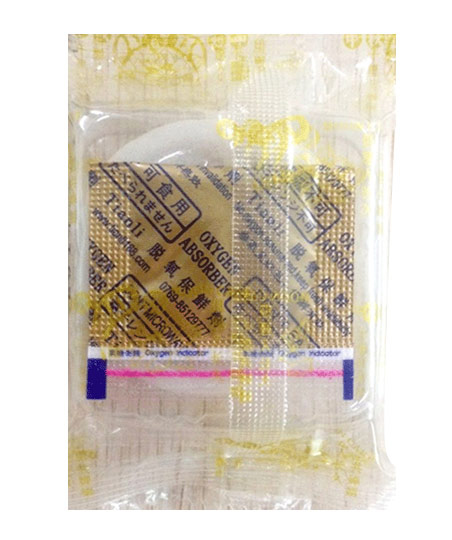
2,1943In that year, Japan was the first to successfully develop the use of iron compounds simultaneously in dried food.
3,20Century60The deoxidizer of the era has achieved rapid development and extensive application in international military industry, metallurgy, precision electronics, antique collection, food and other fields.
4Our country20Century80It was not until the 1980s that I began to come into contact with deoxidizers, and the main research direction was simple iron-based deoxidizers.
After decades of research and application, it has developed from the initial iron-based deoxidizers to organic deoxidizers, biological deoxidizers and other aspects. On the basis of the initial simple deoxidizer function, oxygen-indicating deoxidizers (intelligent deoxidizers), oxygen-absorbing and carbon dioxide-absorbing deoxidizers, oxygen-absorbing and carbon dioxide-absorbing deoxidizers, ethylene-based deoxidizers, etc. have been developed. Among the current market applications, the most successful one is undoubtedly the oxygen-indicating deoxidizer.
Iii. Oxygen-indicating Deoxidizer
1,Oxygen-indicating deoxidizerIt is also known as an intelligent deoxidizer or deoxidation indicator
Literally speaking, it is a product that can deoxidize and also indicate the oxygen concentration in a specific sealed environment.
2The market situation of oxygen-indicating deoxidizers
Dongguan Tianli Company is2008Since then, in-depth research on oxygen-indicating deoxidizers has been conducted.2009It was officially launched into the market in the year and arrived2013In the year, from2009The insufficiency of a year100The sales volume of ten thousand pieces has reached2013years8000The number of pieces is increasing at a rate of several times each year. The rapid growth also reflects the market's recognition and demand for this kind of product.
3Functional characteristics of oxygen-indicating deoxidizers
1) It can prevent the oxidation of oils and fats in food, slow down the time for food to undergo oxidation, change flavor and color, and preserve the original nutrition, flavor and color of food, including vitamins that are easily destroyed by oxygen.
2) The oxygen-indicating deoxidizer is equipped with an intelligent indicator line that shows the oxygen concentration inside the packaging bag, allowing users to clearly see whether the product is effectively protected by the deoxidizer.
3) The use of oxygen-indicating deoxidizers for food packaging greatly facilitates the factory inspection of food enterprises and reduces and eliminates the probability of problem products leaving the factory.
4) The use of oxygen-indicating deoxidizers can guide consumers to determine whether food is safe to consume and reduce the occurrence of foodborne hazards.
5) Oxygen-indicating deoxidizers can consume the oxygen inside food packaging bags in a short time and remove the oxygen that seeps into the bags. Compared with vacuum packaging and nitrogen-filled packaging, they truly achieve low-oxygen or even oxygen-free preservation.
6) When oxygen-indicating deoxidizers are used, they are less affected by the shape of food, such as powder, granular, liquid food, etc.
7) Oxygen-indicating deoxidizers are highly efficient, non-toxic and harmless. All products have been verified through toxicological tests conducted by formal testing institutions.
8) Oxygen-indicating deoxidizer indicator line20The repeated color change more than once strongly guarantees its normal color change after food packaging.
9) The dosage of preservatives that can inhibit aerobic microorganisms in a moderate and low amount by using oxygen-indicating deoxidizers.
10) Due to the restrictions of national laws and regulations, many foods are not allowed to use preservatives. Oxygen-indicating deoxidizers can provide a very good method for the preservation and freshness of these foods.
4Precautions for the use of oxygen-indicating deoxidizers
1) The packaging material used must be less than20ml/m2·day·25℃·1atm
2) When using oxygen-indicating deoxidizers, it is best to place the deoxidizer in a transparent state to facilitate the inspection of the color change indication of the oxygen-indicating deoxidizer.
3) When using oxygen-indicating deoxidizers, the sealing of the product should be strictly controlled. Quality abnormalities such as burns, scratches, and poor sealing of the packaging bag can all cause abnormal discoloration of the deoxidizer.
4) The packaging temperature of food is controlled at50℃The following procedures should be carried out, and no water droplets should form inside the packaging bag.
5) Under normal circumstances, the storage temperature of food products after packaging should be controlled at5~40℃Beyond this range, oxygen-indicating deoxidizers may show varying degrees of abnormal discoloration.
Home Certificates Oxygen Absorber Technology & Support Preservative Series About Products Sitemap Cases
Iron-Based Deoxidizer Non-Iron Deoxidizer Freshness Retention Agent Anti-Corrosion and Anti-Oxidant Desiccant More products
Case Studies of the Moonn Cake Industry Case Studies of the Cake Industry Case Studies of the Bread Industry Case Studies of the Nut and Roasted Seed Industny Case Studies of the Meat Products Industry
 Tianli
 Tianli
 TianliPhone: +86 138 0978 6784Phone: +86 198 9783 1949Email: wujiapei@tianli168.comAddress: No2-3,Huaifeng Road, Huaide Community, Humen Town, Dongguan, Guangdong, China
Dongguan Xinrong Tianli Technical Industry Co.,LtdTechnical support: SRNS