


DeoxidizerIt is a substance widely used in food preservation, which extends the shelf life of food by removing the oxygen inside the packaging. However, in the actual application process, some common problems may be encountered. These problems not only affect the effectiveness of the deoxidizer but also may impact the quality and safety of food. Today, let's take a look at the common problems and solutions in the use of deoxidizers together with our editor!
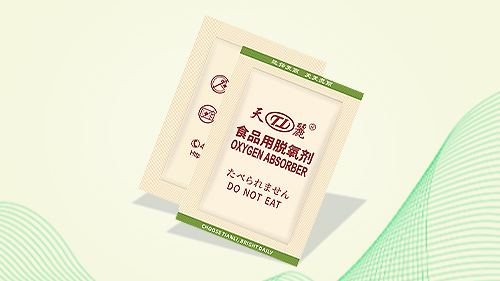
The dosage of deoxidizer is insufficient
Insufficient dosage of deoxidizer is a common problem that affects its effectiveness. When the deoxidizer dosage is insufficient, the oxygen inside the packaging cannot be fully absorbed, allowing microorganisms to still survive and reproduce, thereby leading to food spoilage. The key to solving this problem lies in accurately calculating the required deoxygenation dose. Scientific calculations should be made based on the type of food, packaging volume and expected shelf life to ensure that the deoxidizer can effectively remove all the oxygen inside the packaging. The dosage of deoxidizer can be adjusted by experimentally measuring the amount of oxygen absorbed to achieve the best effect.
The distribution of deoxidizers is uneven
In practical applications, uneven distribution of deoxidizers can also affect their effectiveness. If the deoxidizer is unevenly distributed within the packaging, oxygen in some areas cannot be effectively absorbed, resulting in local food still having an oxidation risk. The solution is to enhance the uniform distribution of the deoxidizer within the packaging. For larger or multi-layered packaged foods, the application points of deoxidizers should be appropriately increased to ensure that each part is effectively protected. In addition, automated equipment can be used for the addition of deoxidizers to ensure uniform distribution.
The packaging has poor sealing performance
The sealing property of the packaging directly affects the application effect of the deoxidizer. If the packaging material has poor air permeability or the seal is not tight, oxygen from the outside will continuously seep into the packaging, weakening the effectiveness of the deoxidizer. To solve this problem, high-barrier packaging materials such as aluminum foil bags or composite film bags should be selected, while ensuring the quality of the sealing process. Conducting sealing performance tests and pressure resistance tests can help confirm whether the sealing performance of the packaging meets the standards. In addition, pay attention to the quality control of packaging materials and avoid using damaged or defective products.
Improper storage environment
The deoxidizer itself has certain requirements for the storage environment. High-temperature or high-humidity environments can cause the deoxidizer to fail or react too quickly. If the deoxidizer is stored for a long time in a non-ideal environment, its effect will be greatly reduced. The solution is to ensure that the storage environment of the deoxidizer is dry, cool and well-ventilated. Before use, check whether the packaging of the deoxidizer is intact and undamaged to avoid moisture. If conditions permit, deoxidizers can be stored in a low-temperature environment to extend their validity period.
The influence of food pH
The pH level of food can also affect the effectiveness of deoxidizers. Some deoxidizers work better in acidic environments but have limited effect in neutral or alkaline ones. If the pH level of the food to be preserved and the deoxidizer are the bestpHA mismatch in the value range may lead to poor oxygenation effect. To solve this problem, the food formula can be adjusted to make its pH level suitable for the selected deoxidizer. It is also possible to select a more suitable type of deoxidizer based on the pH level of the food to ensure its optimal performance in a specific environment.
The failure mark of the deoxidizer is not obvious
Sometimes, users find it difficult to determine whether the deoxidizer has lost its effectiveness, and thus cannot replace or replenish it in a timely manner. To solve this problem, deoxidizers with failure indication signs can be selected. For instance, some deoxidizers undergo color changes after absorbing oxygen, thereby providing a clear indication of failure. In this way, users can replace the expired deoxidizer in a timely manner according to the indication signs, ensuring that the packaging always maintains a low-oxygen environment.
Contact with air during operation
During the operation of adding deoxidizers, if the deoxidizer is exposed to the air for a long time, it will absorb oxygen from the environment in advance, resulting in the loss of its effective components. To solve this problem, the contact time between the deoxidizer and the air should be minimized as much as possible during the operation. The addition operation can be carried out in a low-oxygen environment or vacuum environment, or the deoxidizer can be added quickly and then sealed immediately. In addition, attention should also be paid to the proficiency of the operators to minimize the operation time as much as possible.
Do temperature and humidity have an impact on the effect of deoxidizers?
Cake Preservation and Quality Assurance: How to Choose the Right Preservatives